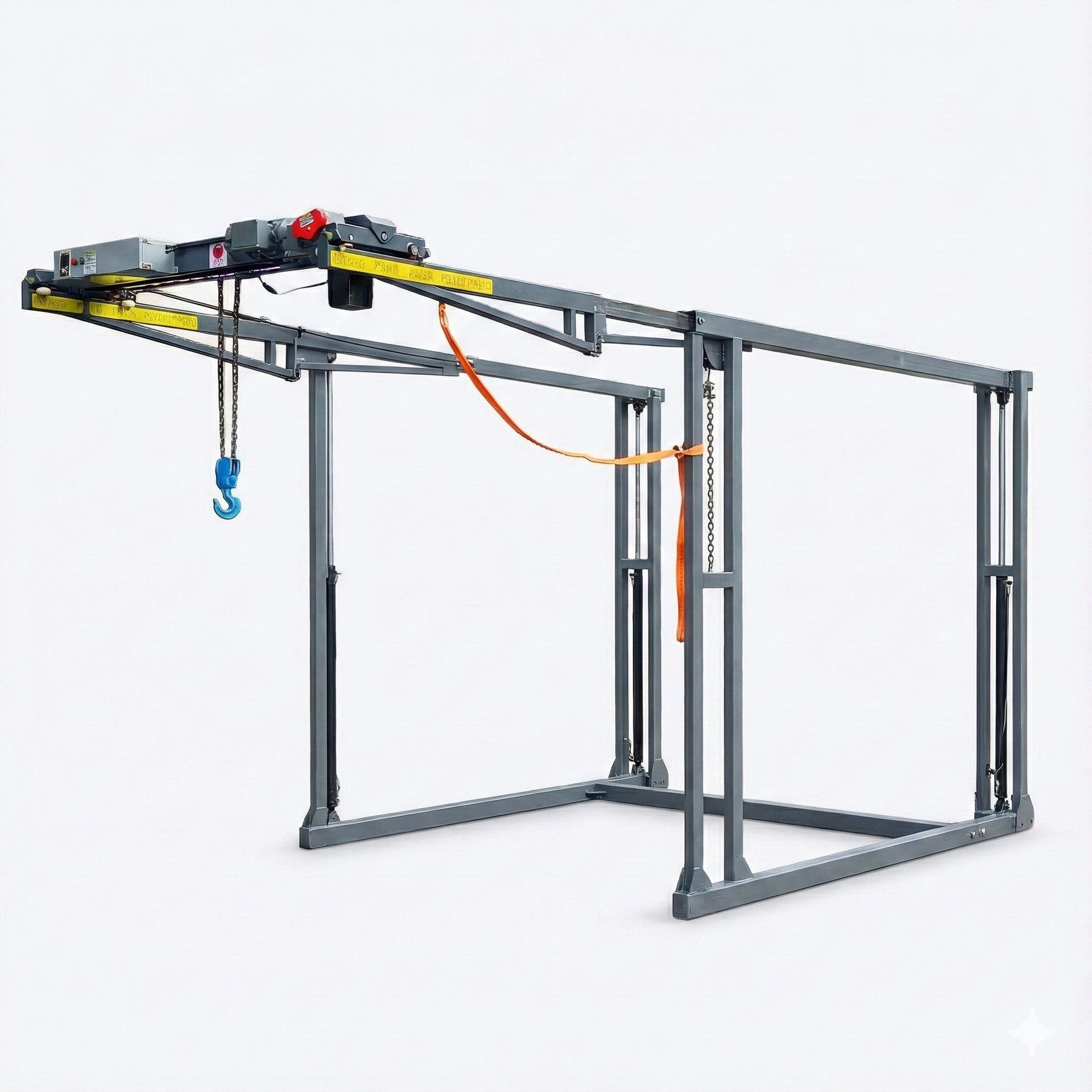
Initiating the following complete review with respect to delivery elevator methods whenever boost both efficiency also employee safety.
We present range of state-of-the-art machinery engineered to cut down liabilities and augment output. Harnessing such attention to reliability, clients can plan for sound and economical means for complete hoisting needs. Specialist help is provided in all phases, facilitating a seamless rollout workflow.
Vacuum Handling Hoists Supplements: An Exhaustive Guide
Vacuum-driven devices serve as a unique fix for moving fine objects that are problematic to grip with standard handling processes. These add-ons use forceful vacuum engineering to steadfastly cling to glossy surfaces, facilitating the dependable lifting of sheets, stone, metal, and different materials. This guide examines the varieties of vacuum lift attachments, their purposes, paramount considerations for picking, and effective approaches for operation. From elementary pads to high-level multi-pad setups, we’ll highlight everything you need to acknowledge about effectively and responsibly using vacuum lift technology.
Tiny Cranes: Fine-tuned Hoisting in Cramped Spaces
Nimble cranes offer a distinct solution for meticulous cargo movement operations in tight spaces. Crafted with minute designs and pivoting booms, these innovative machines succeed where common cranes simply don’t penetrate. Their power to travel through difficult areas makes them optimal for development projects, restoration work, and miscellaneous applications demanding exceptional precision and small space.
Optimizing Raising Capability with Spider Cranes
In order to maximize the impressive raising strength of a rough terrain machine, assess several key aspects. Careful surface stabilization is vital to maintain steadiness and reduce tipping. Additionally, strategic outrigger placement—taking into ground conditions—is vital. As a final point, thorough cargo computation and conformity to producer’s protocols are required for secure services and to deter perils.
Choosing the Best Van Structure for Your Engagement
Opting for the suitable van crane is chiefly important for maintaining safety on your construction undertaking. Examine the load you’ll be shifting – a petite van lift might suffice for light units, but a strong unit is fundamental for considerable supplies. Weigh also the length needed; reduced intervals demand a separate design than ample versions. Furthermore, take into account operational conditions – is the foundation smooth? Will you be working in a tight area? Here’s a recap guide:
- Check mass needs.
- Authenticate distance requirements.
- Consider setting.
- Compare diverse models.
Familiarizing Yourself With Vacuum Lift Technology for Cranes
Suction carrying systems constitutes a revolutionary technology for handling weighty products with lifting equipment. Instead of relying on customary wire rope hauling techniques, vacuum devices leverage powerful suction to safely adhere to even substrates. This capability is particularly helpful for controlling fragile items that might be impaired by structural clamping systems. Issues include material finishing and the mandatory vacuum power for hazard-free application.
Small Crane Load Limit: Vital Knowledge
Understanding a mini apparatus’s handling capability is absolutely necessary for reliable handling. In most cases, a spider lifter offers a scale of maximal abilities, usually from around 1 recognized ton to as much as 10 standard metric tonnes. However, this is able to alternate materially based on factors like column scope, outrigger setup, and the surface’s integrity.
- Evaluate the aggregate burden of the cargo you intend to carry.
- Constantly examine the apparatus’s load rating previous to any activity.
- Bear in mind that surrounding variables such as airflow and tilt can change balance.
It proves to be essential to check with a certified engineer to validate that the preferred mechanism is adequately scaled for the intended task.
Van Mechanisms vs. Multi-jointed Devices: A Detailed Analysis
Considering electing the correct equipment for a project, mastering the disparities between van light lifts and spider mobile equipment is crucial. Van portable hoists excel in narrow locations, offering commendable dexterity and comfort of movement. However, their handling power is typically restricted compared to spider folding lifters. Mobile platforms, conversely, grant a larger scope and improved lifting strength, due to their adjustable extension, but can be more tricky to handle in remarkably confined environments.
Careful Carrying Methods with Spider Hoist Attachments
Accurate use of lightweight lifts with their components demands strict adherence to safe hoisting recommendations. Consistently scrutinize the accessory before each transport, ensuring its matching with the load and the machine’s specification. Avoid overreach the lift’s authorized payload mass.
- Check substrate firmness prior to hoisting.
- Harness appropriate connecting hardware.
- Conserve unobstructed interaction between the pilot and spotter.
In addition, confirm complete personnel are sufficiently prepared in lightweight mechanism usage and accessory risk management procedures.
Thus, our details stress the important obligations of commercial lifting devices and mobile lifters in state-of-the-art spider crane lifting capacity material management. Employing vacuum-driven handling solutions amplifies safety while increasing load. Picking the best compact or flexible device is based on assignment expectations, terrain, and space constraints. Conformance to established hoisting standards together with adequate coaching provides peak function and durability of equipment.
Comments on “revenue enhancing contractor grade vehicle lifting assemblies?”